
Structural Monitoring and Geotechnical Sensors: Lessons from the Collapse of the Carmel Tunnel

Technical analysis focused on risk prevention in urban tunnels

The collapse of the Carmel Tunnel in Barcelona became one of the most impactful events in recent underground construction history. This blog analyzes how the combination of structural monitoring, sensors, and advanced excavation techniques has changed the game in protecting heritage structures, such as the Sagrada Familia, from geotechnical risks.

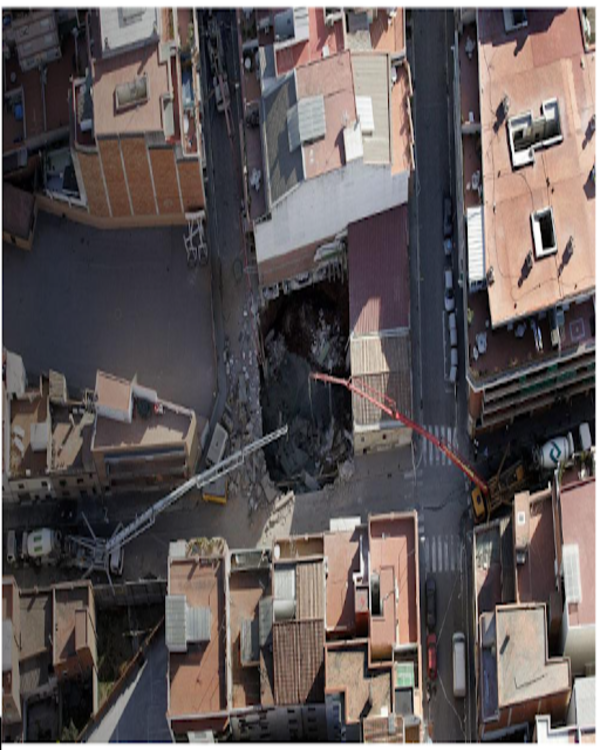
Urban tunnels, heritage structures, sensors, and geotechnical risk: this seemingly technical combination has behind it a story that changed everything. In 2005, a mere 10-meter stretch of the Carmel Tunnel in Barcelona collapsed, triggering an urban, technical, and political crisis. A building was swallowed by a sinkhole, over 1,000 people were evacuated, and losses exceeded 100 million euros.

But beyond the disaster, this event marked a turning point in structural monitoring and excavation techniques in urban areas. Below, we explain what we’ve learned since then.
What Caused the Collapse of the Carmel Tunnel?

The tunnel, excavated using the New Austrian Tunneling Method (NATM) at a depth of 32 meters, traversed layers of sandstone and mudstones. While this method aims to leverage the resistance of the terrain, the excavation lacked precise geotechnical monitoring and deformation control. The result: the collapse progressed upwards, creating a 30-meter diameter sinkhole.

Sagrada Familia: How to Protect a Monument from Underground Risks?

When planning the construction of a new high-speed railway tunnel beneath Mallorca Street, right next to the Sagrada Familia, citizens and experts raised significant concerns. How could another disaster like the Carmel Tunnel be avoided?

The solution was to implement a combination of:

  • Real-time structural monitoring 
  • Geotechnical sensors in soil and structures 
  • Controlled excavation techniques (EPBS) 
  • Protection walls (pile screens)

How Does Structural Monitoring Work?

Structural and geotechnical monitoring is a preventive tool that allows:

  • Detecting millimeter differential settlements 
  • Measuring horizontal and vertical deformations in walls and foundations 
  • Recording changes in soil pressure 
  • Observing in real-time the structural response to excavation-induced loads 

This is achieved with technologies such as:

  • Inclinometers 
  • Extensometers 
  • Load cells 
  • Fiber optic sensors 
  • Data acquisition systems connected to the cloud 

In the case of the Sagrada Familia, an instrumentation mesh was implemented around the structure, connected to monitoring stations that allowed immediate decision-making in case of any variation.

EPBS Excavation: Technology at the Service of Control

The tunnel excavation technique using Earth Pressure Balance Shield (EPBS) was adopted after the Carmel event as the standard in urban environments. This system allows:

  • Controlled pressure application at the excavation face 
  • Pressurized grout injection behind the shield 
  • Minimizing the circumferential void between the tunnel and the terrain 

Precise pressure control is vital: it prevents both collapses and unwanted heave. Additionally, the automation of monitoring allows real-time adjustments of excavation parameters, optimizing safety.

Pile Walls as Structural Protection

The most visible measure to protect the Sagrada Familia was the construction of a 40-meter deep pile wall along the most exposed façade. This wall acted as a physical barrier to isolate soil deformations caused by the excavation.

The design included:

  • 1.5-meter diameter piles, spaced 2 meters apart 
  • A rigid upper beam connecting the piles 
  • Numerical and semi-analytical analysis to validate its effectiveness

What Was the Outcome?

  • Expected settlements: 8 mm 
  • Measured actual settlements: 1.5 mm 
  • Actual soil loss volume: 0.04% 

A huge difference compared to the projected scenario.

What Lessons Does This Case Teach Us?

Lesson 1: Monitoring is not a luxury, it’s essential

Proper instrumentation can detect risks before they cause damage. It’s not just about reacting, but about anticipating.

Lesson 2: Techniques matter

The use of EPBS machines with controlled pressure is crucial in sensitive urban contexts. Not every method works.

Lesson 3: Models help, but don’t solve everything

Numerical analyses should be validated with real data. Interpretation without monitoring can lead to overestimates or underestimates.

Lesson 4: Each building is unique

Applying simplified models (like the Timoshenko beam model) is not feasible for unique structures like the Sagrada Familia. Analyses must be adapted.

Final Reflection

The Carmel Tunnel collapse marked a before and after in how underground works are approached in urban areas. Structural monitoring, the use of advanced sensors, cutting-edge excavation technology, and geotechnical protection solutions should be seen as investments in safety and heritage, not as additional expenses.

Today, connecting structural sensors to cloud platforms allows real-time detection of micrometric changes and informed decision-making. A resilient city needs data, technology, and professionals ready to integrate both.

By: Worldsensing

References

  • Marr, W. A. (2022). Squeezing More Life From Old Bridges. GeoStrata Magazine Archive, 26(4), 48-54.
Scroll al inicio