
5 Keys to Success in Underground Mine Monitoring

Learn to manage risks and safety in mining

Global attention to sustainability is pushing mining companies deeper underground in search of materials for clean energy generation. These underground mining operations will be crucial for our future as the availability of vital minerals like nickel and copper in surface mines declines. But underground mining comes with dangers, from the risk of collapses to the potential for asphyxiation from harmful gases. Therefore, it’s crucial for mining companies to implement advanced monitoring systems that help improve the overall risk management and safety of the mine workers.
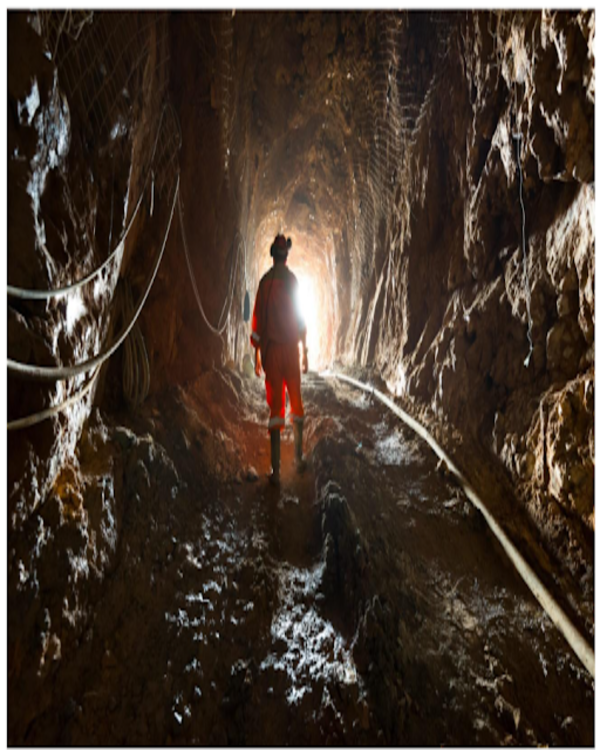
Getting the monitoring part right isn’t easy. Every mine is different, and many technologies are available that companies can use to meet their specific circumstances. However, there are several success keys that can help mining companies make the right decisions when it comes to monitoring systems. Here are five of the most important ones.

1. Avoid Wired Networks

Mining environments are complex, with tunnels and galleries branching out in all directions. Using wireless data transmission technologies to monitor risk points in such environments can be tricky. Just imagine the solid rock walls of underground mines. The physical obstacles that can interfere with radio signal coverage are numerous. But expecting busy mining crews to keep track of ethernet cables is even more challenging. While it’s evident that wireless technologies have a limited range underground, there are ways to overcome these limitations. And the benefits of wireless, battery-operated monitoring devices that can connect to existing sensors and systems far outweigh the suitability of wired networks in most situations.

2. Choose Long-Range LoRa (IoT) Technology

IoT-based wireless technology has become a standard for underground monitoring. A typical network technology used in this scenario is mesh networks. In terms of range, node-to-multi-node communications like mesh can cover up to hundreds of meters. LoRa long-range star topologies, in comparison, have proven to work well in mine designs where there is line of sight, such as main tunnels, ventilation shafts, and room-and-pillar mines. However, both network topologies can encounter issues in more complex environments. That’s why Worldsensing recommends using a long-range LoRa tree topology, where the network can branch out to reach smaller, harder-to-access spaces.

3. Look for Sub-GHz Solutions

Short-range mesh networks often operate at a frequency of 2.4 GHz. This frequency works well on the surface but quickly attenuates underground due to elements like water in the rocks. As a result, these technologies rarely exceed a hundred meters in a single data transmission hop and can struggle to reach a few meters. In contrast, sub-GHz technologies can achieve much greater distances underground. They can reach several hundred meters in medium-range mesh networks and several kilometers with long-range LoRa technology when arranged in a tree topology.

4. Find Reliable Suppliers

Underground environments are harsh, and a loss of monitoring data can lead to critical incidents. Therefore, it’s essential to choose a technology provider that has a top-tier quality system, including ISO and industry certifications. Reputation, field experience, and IoT knowledge are important. You want a support team and an organizational structure that complements your own. Worldsensing’s technology has been field-tested in over 130 mines worldwide, including both surface and underground projects. In addition to the durability of the device and network, working with a leading supplier can ensure your monitoring data integrates easily into your own or third-party data visualization systems.

5. Be Careful with Scaling

You might want to start small by connecting only a few geotechnical or structural sensors to an IoT device and network technology for wireless data capture and transmission. But what happens if you want to scale or reconfigure the deployments as the excavation process continues? Some network technologies are suitable for small underground monitoring deployments and limited pilots, partly due to their price and ease of implementation. But what if you need to scale or redistribute the network based on the mine project’s needs? That’s when you’ll want to use technology that can manage data collection from hundreds of devices through a gateway in a single network.

“In medium and short-range mesh networks, more gateways are needed, which means more maintenance and more potential failure points,” says Andrea Bartoli, Chief Technology Officer at Worldsensing.
“Working with the long-range sub-GHz tree topology provides underground mines with the perfect blend of efficiency, robustness, and scalability,” adds Bartoli.

By: Worldsensing

References

  • Worldsensing. (n.d.). 5 keys to success in underground monitoring of mines. Worldsensing.
Scroll al inicio