
How Much Weight Can Helical Piles Support? Methods and Calculations

Discover how to calculate the load capacity of helical piles using three main methods

Helical piles provide strong and stable foundations, ideal for difficult terrains or industrial applications. To ensure a secure base, it’s essential to accurately calculate their load capacity. In this blog, we explore three key methods for determining how much weight helical piles can support.
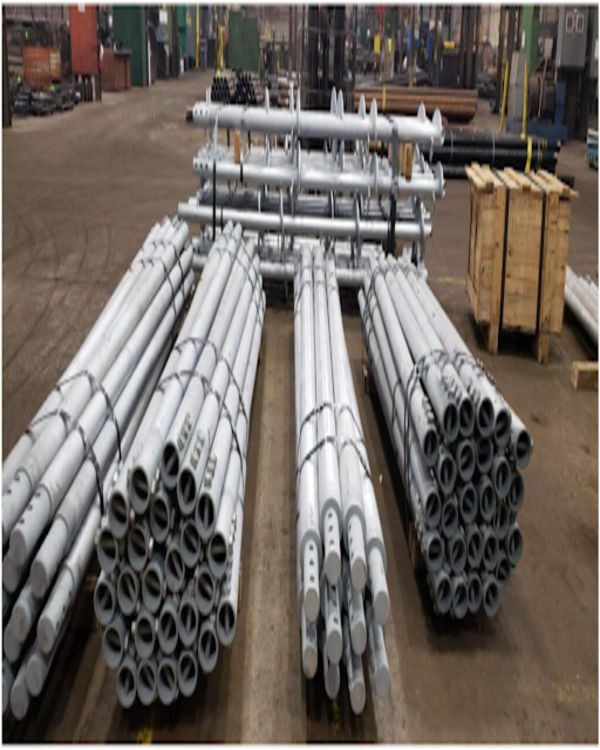
Helical piles are an efficient solution for foundations in complex soils or areas with high structural loads. Due to their critical role in the stability of industrial and commercial buildings, it’s important to know their exact load capacity.

However, the capacity of a helical pile depends on multiple factors, such as the material and construction of the pile, as well as the conditions of the soil where it will be installed. To accurately determine how much weight, it can support, there are three main methods:

  1. Torque Correlation 
  2. Soil Load Capacity 
  3. Direct Capacity Measurement 

Let’s break down each method in detail.

1. Torque Correlation

Also known as the relationship between torque and ultimate load capacity, this empirical technique measures the resistance during the installation of the helical pile. The denser and more resistant the soil is, the higher the torque required to install the pile, indicating a higher axial load capacity (capacity to support weight in the vertical axis).

Torque Correlation Formula
To calculate the load capacity with this method, the following equation is used:

Qult=Kt⋅T

Where:

  • Qₛₗᵗ = Ultimate load capacity (in kg or kN) 
  • Kₜ = Torque correlation factor (depends on the pile size and type) 
  • T = Average installation torque (in kg-m or kN-m) 

Since the torque correlation factor is related to the diameter of the pile, smaller piles usually have higher Kₜ values, while larger ones have lower values.

In simple terms: the harder the soil, the higher the helical pile’s load capacity.

2. Soil Load Capacity

This method relies on theoretical calculations using soil resistance data obtained through geotechnical tests, such as the Standard Penetration Test (SPT). In this test, soil is drilled, and the material’s resistance to the drilling process is measured.

The data obtained includes:

  • Soil profile 
  • Groundwater presence 
  • Soil unit weight 
  • Soil classification 

Soils can be classified as:

  • Fine soils: like clays and silts, which generate higher lateral friction on piles. 
  • Granular soils: like sands and gravels, which can provide higher load capacity due to compaction. 

These factors affect friction and installation torque, which in turn influences the pile’s load capacity. Using this data, engineers can predict the pile’s load capacity before actual installation.

3. Direct Capacity Measurement

Direct capacity measurement is done through static load testing, following ASTM standards for deep foundations under axial compressive load.

How does the load test work?

  1. The helical pile is installed in the test soil. 
  2. A compressive load is applied in controlled increments. 
  3. The pile displacement is measured after each load increment. 
  4. The process continues until the maximum load is reached or the pile structurally fails. 

This method is the most accurate and reliable as it simulates the actual operating conditions of the pile in the structure. However, due to its cost and complexity, it may not always be feasible for every project.

Which Method is Best?

To ensure the safety and stability of a foundation, it’s ideal to combine at least two methods.

In some cases, engineers may rely solely on torque correlation, especially when the budget doesn’t allow for additional testing. However, if only this method is used, it is recommended to apply additional safety factors to compensate for the lack of more precise data.

Helical piles are one of the most durable and versatile foundation solutions on the market. If you need to install helical piles for your project, consult with a team of experts to ensure a safe and efficient installation.

By: Ph.D. Carolina Hernández Valerio

References

  • Elite Helical. (2022). How to Determine Helical Pile Load Capacity. Elite Helical. Retrieved on [06/02/2025].
Scroll al inicio