
Helical Piles vs Concrete Foundations for Communication Towers: A Technical Comparison

We analyze construction speed, performance on poor soils, quality control, environmental impact, costs, and durability

Communication towers require foundations that resist compression, tension, lateral loads, and can be safely constructed in remote locations or areas with limited access. In this blog, we technically compare helical piles and drilled concrete foundations to understand when each system is appropriate and how they impact project timelines, geotechnical risks, and the infrastructure’s lifecycle.
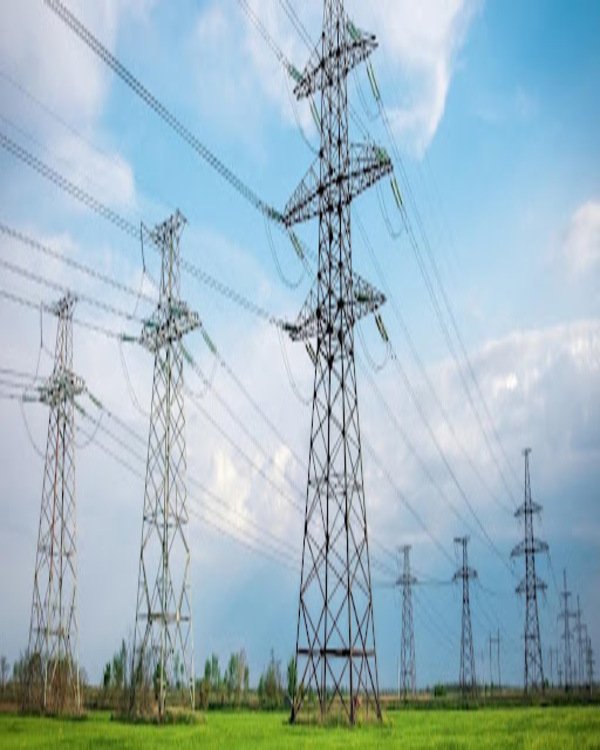
Communication towers—whether lattice or monopole—need more than just to “stay up.” Their foundation must resist wind uplift, lateral loads, moments, and at the same time, be constructible in challenging soils with poor access or tight schedules.

In practice, the two most common foundation solutions are:

  • Helical piles 
  • Concrete foundations, especially drilled shafts and massive footings 

Both can meet the ultimate and serviceability limit states, but they behave quite differently in terms of speed, risk, soil interaction, and environmental impact. Let’s dive into the technical differences.

1. Construction Speed and Schedule Risk

In telecom projects, time is often of the essence: there are shutdown windows, regulatory commitments, and fixed radio integration dates that are hard to move.

Helical Piles: Installation and Immediate Load Capacity

Helical piles are screwed into the ground using compact equipment (mini-excavators, tracked excavators, etc.). They do not require fresh concrete, drilling slurry, or curing time. As soon as the target torque is reached, the pile is ready for load-bearing, and the tower can be installed immediately.

The installation torque itself serves as a real-time indicator of axial capacity, allowing the engineer to verify that the required capacity is met for each pile. This feedback loop significantly reduces:

  • Schedule uncertainty 
  • Risk of rework 
  • Emergency redesigns in the field 

Concrete Foundations: More Steps, More Variables

Concrete solutions, especially drilled shafts, involve a longer sequence of activities:

  • Excavation or drilling of the shaft 
  • Placement of reinforcing steel 
  • Possible casing or slurry stabilization 
  • Dewatering if necessary 
  • Concrete pouring, vibrating, and finishing 
  • Curing: between 7 and 28 days to achieve design strength 

Each step depends on weather, concrete plant logistics, accessible routes, and available supervision. Any deviation from the plan—such as weather or logistical challenges—can lead to schedule delays that cascade to the tower installation and commissioning.

2. Soil Conditions and Structural Behavior

A typical tower applies complex stress: compression on windward legs, significant tension on leeward legs during wind events, plus shear and bending moments at the base.

Helical Piles’ Advantage in Tension and Problematic Soils

Helical piles are particularly efficient in situations where tension and load reversals dominate:

  • The helical blades behave like embedded anchors in competent strata. 
  • They resist both compression and tension without the need for large anchor blocks. 
  • In stratified or poor soils—such as soft clays, loose sands, or fills—the installer can “chase capacity” deeper by adding shaft extensions until the specified torque is reached, bypassing weak layers without requiring mass excavation. 

Concrete Foundations: Efficient but More Sensitive to Surface Layers

Concrete options can also mobilize high capacities, but they are more sensitive to near-surface conditions:

  • Shallow footings work well where there are competent upper strata; in soft soils, they rapidly grow in size or require over-excavation and structural backfill. 
  • Drilled shafts reach deeper competent layers but can require casing and dewatering in collapsible, saturated, or gravely soils, adding cost and construction risk. 

In terms of lateral rigidity and moments, large-diameter shafts and massive concrete blocks provide excellent rigidity. Helical systems can achieve similar performance with:

  • Larger diameter tubular shafts 
  • Batter piles (slanted piles) 
  • Distribution heads that combine multiple piles under one support 

However, the design tends to involve more elements and more coordination.

3. Quality Control and Risk Management

An often-overlooked, yet crucial, aspect is how quality is controlled in each system.

Helical Piles: Verified Capacity in Real-Time

For helical piles:

  • Torque vs. depth is recorded during installation. 
  • The torque is correlated with axial capacity through established design criteria. 
  • The record serves as a structured QA/QC log for each pile. 

By combining this data with punctual load tests (compression or tension), early evidence of the system meeting design capacities is obtained.

Concrete Foundations: Quality Control Focused on Materials, Not Direct Capacity

In concrete foundations, quality control revolves around:

  • Concrete mix design and strength (cylinders, cores) 
  • Placement and cover of reinforcing steel 
  • Visual inspection of the shaft or excavation bottom when possible 

The actual capacity of the element is only known with certainty after curing or through specific load tests. If surprises arise during drilling—such as slurry loss, wall collapse, or obstructions—mitigation is often slow and costly: additional casings, diameter changes, length extensions, or, in extreme cases, relocation of the foundation.

4. Environmental Impact and Access Restrictions

Towers are often located in remote, rural, mountainous, or environmentally sensitive areas.

Helical Piles: Minimal Disturbance

Helical systems stand out because:

  • They generate minimal waste: almost no debris or drilling slurry. 
  • They produce low noise and vibration, which is favorable near existing infrastructure. 
  • They eliminate the problem of concrete washing and associated waste. 

Additionally, they can be installed with light equipment, avoiding:

  • Concrete trucks on fragile dirt roads 
  • Bridge load restrictions 
  • Complex maneuvers on steep slopes 

In sites with difficult access, this logistical simplicity translates directly into cost savings and schedule certainty.

Concrete Foundations: More Movement, More Impact

Concrete foundations entail:

  • More extensive excavation at the surface 
  • Handling and hauling of waste soils 
  • Higher truck traffic, pumps, and heavy equipment 

In well-served urban environments, this can be easily managed. However, in wetlands, forests, or remote hillsides, the environmental and logistical impact becomes a determining factor.

5. Costs, Contingencies, and Scenarios Where Each System Wins

In terms of total installed cost for typical telecom projects, helical piles tend to be competitive or even more economical, especially when:

  • Concrete must be transported long distances 
  • Access is challenging 
  • Curing times are incompatible with the schedule 

The helical system uses smaller crews and reduces the number of weather-sensitive activities, lowering the contingency for unforeseen events.

On the other hand, concrete remains a very efficient option when certain conditions are met:

  • Shallow soils with good capacity 
  • Easy access to concrete plants 
  • High lateral rigidity demands, where a massive block is acceptable and easy to construct 

Rather than focusing solely on the initial foundation cost, it’s worth considering cost variability:

  • With helical piles, if the soil turns out softer than expected, the length can be increased or helices added, controlling capacity via torque, without major redesigns. 
  • In a drilled shaft, encountering a soft layer or high water table might require casings, pumping, design changes, and, as a result, change orders, re-scheduling, and more administrative management.

6. Durability, Corrosion, and Lifecycle

From a durability perspective, both systems can be designed to last for decades, provided adequate precautions are taken.

Helical Piles: Corrosion Strategy

For helical piles:

  • Hot-dip galvanizing 
  • Special coatings 
  • Sacrificial wall thicknesses 
  • Cathodic protection in extreme environments 

Concrete Foundations: Durability Depends on Mix Design and Detailing

In concrete foundations, durability depends on:

  • Mix design (water-cement ratio, additives, etc.) 
  • Steel detailing and coverage 
  • Cracking control 
  • Exposure to sulfates, freeze-thaw cycles, or aggressive environments 

One advantage of helical piles is that in many cases, they can be unscrewed and removed at the end of the tower’s life, leaving minimal trace. This is useful when the land is leased or when the infrastructure is expected to be relocated.

7. Practical Guide for Tower Programs

Summarizing the technical criteria, here are some decision rules:

  • Accelerated construction, emergency restorations, or temporary sites: Helical piles allow for immediate load-bearing and are removable. 
  • Remote, rugged, or restricted access sites: The absence of concrete trucks and the use of light equipment favor the helical solution. 
  • Poor or highly variable soils: Helical piles allow for capacity adjustment in the field based on torque; they are particularly robust against geotechnical “surprises.” 
  • Urban areas with good access to concrete and massive lateral rigidity demands: Drilled shafts or large concrete footings can be straightforward and economical. 
  • Mass deployment programs in highly variable soils: Systematic use of helical piles helps reduce change orders and delays across multiple sites.

Conclusion

Both helical piles and concrete foundations can provide safe and durable support for communication towers. The difference lies not in one being “better” than the other, but in how each manages time, soil variability, access, environmental impact, and project risk.

If the key values are:

  • Immediate load-bearing 
  • Minimal disturbance 
  • Predictable capacity in poor soils 

Then helical piles stand out as the more efficient option.

When the site has:

  • Good shallow soils 
  • Simple concrete logistics 
  • Massive lateral rigidity demands 

Then concrete foundations remain a tried-and-true, economical solution.

The best strategy for a tower program is not to commit to one system, but to choose the foundation that best aligns with site realities and scheduling priorities, smartly leveraging the strengths of each technology.

Scroll al inicio