
Helical Anchors: An Efficient and Eco-Friendly Alternative to Traditional Anchoring Systems

Discover how helical anchors are revolutionizing the industry by offering a faster, more cost-effective, and eco-friendly solution

Are you still using traditional deadweight anchors or large piles? Maybe it’s time for an upgrade. Helical anchors are not only faster to install, but they are also more environmentally friendly and budget-conscious. In this blog, we explore how this technology is making a difference in the efficiency and sustainability of modern structural anchoring.
What Are Helical Anchors?

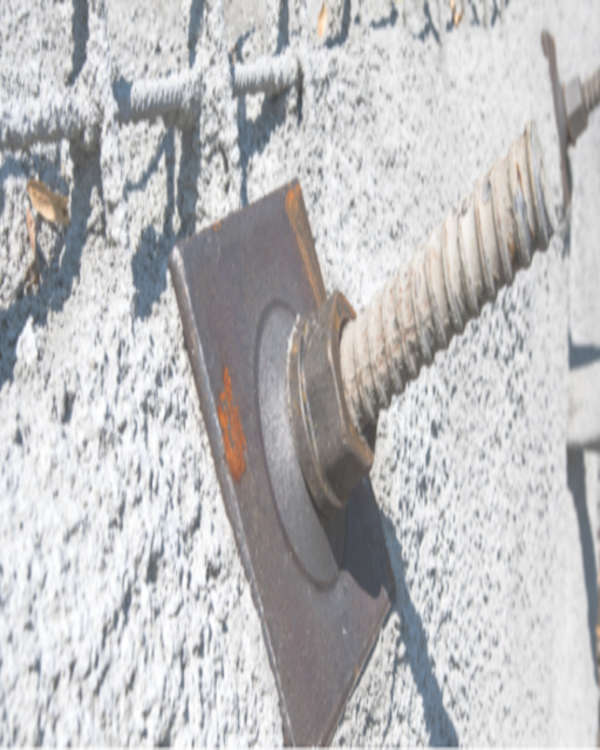
In simple terms, helical anchors are spiral-shaped devices that are screwed directly into the ground. They act as giant screws that secure structures like towers, poles, renewable energy systems, and even temporary or permanent foundations.

And the best part: you don’t need to excavate, pour concrete, or wait for days for curing.

Why Replace Traditional Anchors?

Traditional systems—such as deadweight anchors or piles—have been the standard for years, but they come with considerable disadvantages:

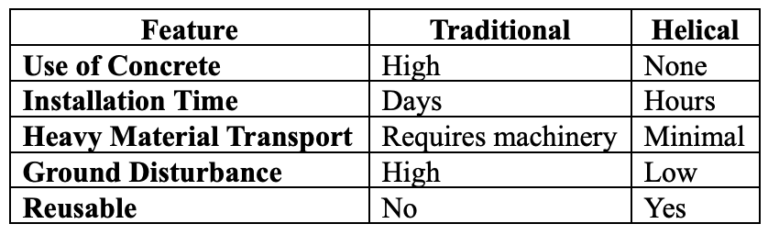
  • Heavy and Bulky: They require specialized transportation and heavy machinery. 
  • Slow Installation: They can take days, instead of hours, to install. 
  • Heavy Concrete Use: They contribute to higher CO₂ emissions. 
  • Difficult to Remove: They leave permanent waste or require demolition. 

In contrast, helical anchors solve all of these problems in one fell swoop.

Key Advantages of Helical Anchors

  1. Faster and Simpler Installation
  • Only a portable team or light machinery is required. 
  • Installed in a matter of hours, not days. 
  • No waiting time for concrete curing. 
  1. Lower Environmental Footprint
  • Eliminates the use of concrete, reducing CO₂ emissions. 
  • Causes minimal disturbance to the ground. 
  • Can be reused or removed without leaving waste. 
  1. Cost-Effective
  • Reduces costs in transportation, labor, and materials. 
  • Less time on-site = lower operational expenses. 
  • No costs associated with waste or massive excavation. 
  1. Flexibility and Adaptability
  • Ideal for various soil types. 
  • Can be installed in tight or remote spaces. 
  • Useful in both permanent and temporary projects. 

How Do They Work?

The key lies in the helical design, which allows the anchor to penetrate the soil by rotating, much like a screw. Once the desired depth is reached, resistance is measured in real-time during installation to ensure that the anchor meets the required load specifications.

Additionally, if the project changes location or ends, the anchor can be removed, reused, or recycled.

Measurable Sustainability

Compared to traditional anchors, helical ones have a much lower environmental impact:

Common Use Cases

Helical anchors are ideal for:

  • Telecommunication towers 
  • Solar and wind infrastructure 
  • Roadway lighting 
  • Temporary structures at fairs or events 
  • Reinforcing existing structures 

Their versatility makes them an attractive solution in multiple industries.

Final Thought: Change the Anchor, Change the Impact

There’s no need to stay anchored to heavy, slow, and polluting methods. Helical anchors offer a cleaner, faster, and more cost-effective solution for almost any application. And the best part: they align your projects with the sustainability principles the world needs.

So, the next time you think about how to secure a structure, think about securing the future.

By: Ph.D. Carolina Hernández Valerio

References

  • Hubbell Power Systems. (2023, September 6). Helical Anchors: An Efficient and Eco-Friendly Alternative to Traditional Mushroom, Deadweight, and Pile Anchors. Hubbell Power Systems Blog
Scroll al inicio